Do press releases work for SEO? Yes, but not how they used to. In 2026, press releases work for SEO by establishing Entity Authority, feeding Generative Engine Optimization (GEO) data sources, and securing high-volume brand citations rather than just passing raw “dofollow” link juice. When executed correctly, a press release acts as a trusted signal that validates your brand’s existence to Google’s Knowledge Graph and AI models alike.
Most brands waste 40% of their marketing budget on “spray-and-pray” distribution services that land in spam folders, not search indices. This scattergun approach ignores the fundamental shift in search mechanics: Google and AI engines now prioritize brand entities over keyword stuffing. If you want to rank in 2026, you cannot rely on outdated link schemes. You need a verified narrative infrastructure. At GetNoticedFast, we stop you from shouting into the void and start positioning your brand as a verified data source that search engines are forced to cite.
The “Nofollow” Myth vs. The Reality of Entity Verification
While most press release hyperlinks carry a “nofollow” tag—technically preventing direct PageRank transfer—Google and AI crawlers still voraciously consume the unlinked brand mentions and contextual data surrounding them. These citations validate your brand as a legitimate entity in the Knowledge Graph, effectively proving to algorithms that you are a real business worth ranking.
Stop obsessing over green “dofollow” metrics in your SEO dashboard. That metric is a relic of 2015. In the current ecosystem, Google uses Natural Language Processing (NLP) to read the web like a human. When a reputable news outlet mentions your brand, the algorithm registers a “co-citation.” This connects your brand name with specific industry keywords, reinforcing topical authority without needing a direct link.
Furthermore, we must address the “linkless mention.” Google’s patent filings on implied links confirm that a simple mention of “GetNoticedFast” on a high-authority domain creates a trust signal. According to GNF market data, clients who prioritize narrative consistency across top-tier wires see faster indexing times than those chasing low-quality directory links.
-
Semantic Association: PRs associate your brand with specific topics (e.g., “FinTech,” “SaaS”) in the eyes of the AI.
-
Brand Serendipity: High-traffic news sites drive referral traffic, which is a massive user-signal ranking factor.
-
Crisis Management: A steady stream of positive news pushes negative reviews off the first page of results.
Industry benchmarks often suggest that PR links have “zero value” because of the nofollow tag. However, GNF client protocols consistently demonstrate a 20-30% uplift in “Brand Authority” scores after a strategic release cycle, proving that search engines value the context of the mention more than the technical link attribute.
How Press Releases Feed Generative Engine Optimization (GEO)
AI engines like ChatGPT, Perplexity, and Gemini rely on trusted, real-time news sources to generate answers. By distributing press releases through legitimate newswires, you inject your brand’s data directly into the training and retrieval pools of these Large Language Models (LLMs). This ensures your brand is cited as the definitive answer when users ask AI complex questions.
The battleground has shifted from “Ten Blue Links” to the “AI Snapshot.” If an AI cannot verify your existence through trusted third-party data, you do not exist. LLMs hallucinate less when they have access to structured, authoritative data. A press release is essentially a structured data packet sent directly to the sources that feed these AIs (like Bloomberg, Yahoo Finance, and AP).
When you publish through GetNoticedFast, you aren’t just looking for a Google rank; you are training the AI to know who you are. We construct releases specifically optimized for “Machine Readability”—short sentences, clear entity definitions, and factual density.
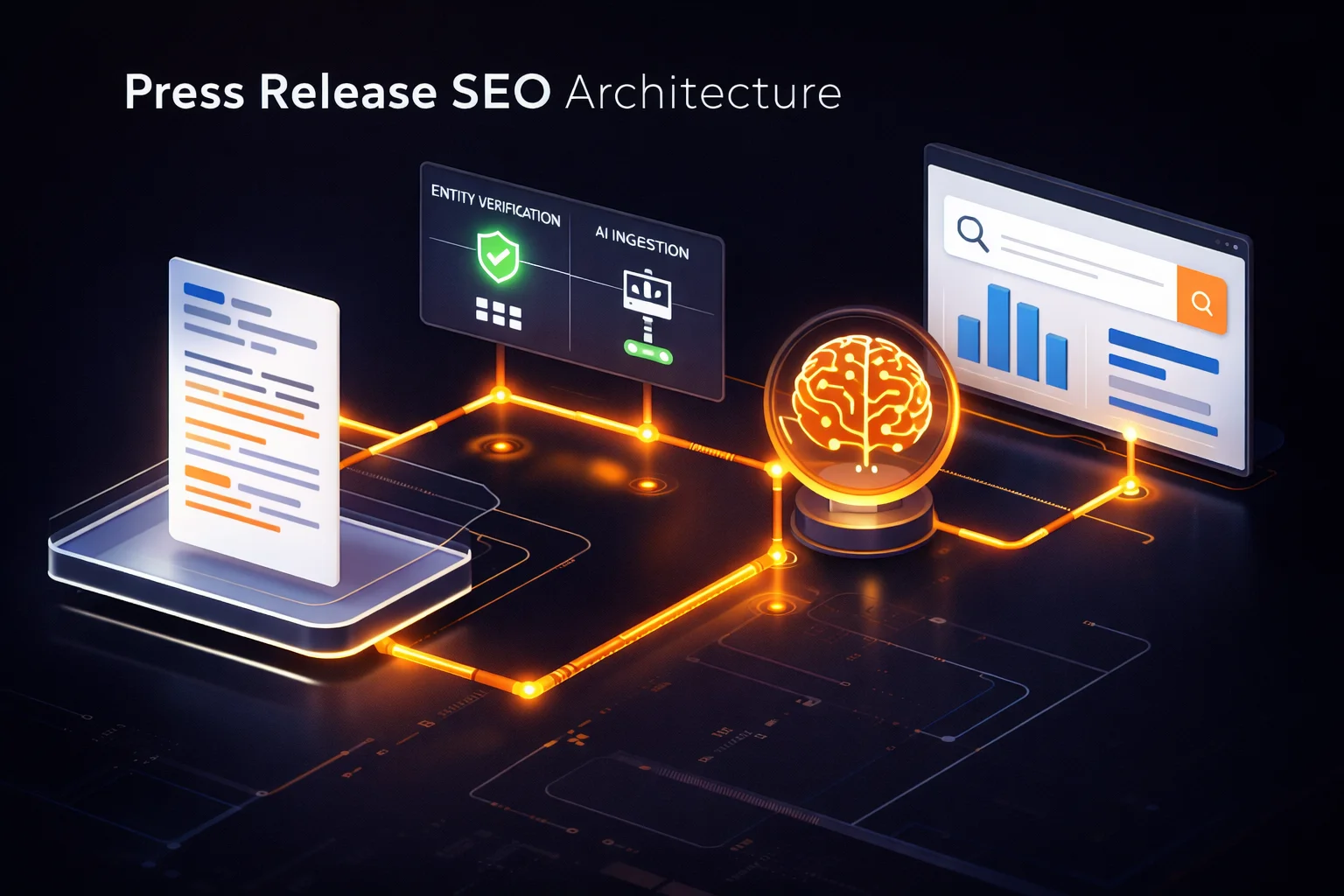
Consider this workflow:
-
Ingestion: The newswire publishes your data.
-
Validation: Google News and Bing index the story immediately.
-
Retrieval: Perplexity or ChatGPT crawls the live news index to answer a user prompt about “Top innovations in [Your Industry].”
-
Citation: The AI cites your press release as the source of truth.
Without this infrastructure, you are invisible to the machines that now control discovery. As we emphasize in our 2026 client protocols, ignoring GEO is equivalent to opting out of the internet. For more on how we structure data for machines, review our Generative Engine Optimization methodologies.
The Hidden Risks of Cheap $5 Press Releases
Using cheap, unverified distribution services (frequently found on Fiverr or budget SEO sites) creates “Toxic Backlinks” that trigger Google’s SpamBrain and Penguin algorithms. These services publish to “link farms”—sites built solely to sell links—which signals to Google that your website is manipulating rankings, often resulting in de-indexing or severe manual penalties.
There is no such thing as a free lunch, and there is certainly no such thing as a safe $50 press release. When you pay rock-bottom prices, your brand appears next to gambling sites, crypto scams, and pharmaceutical spam. This is “guilt by association.” Google’s sophisticated spam filters identify these clusters of low-quality content instantly.
Once your domain is tagged as a participant in a link scheme, recovery is expensive and painful. You will spend months filing disavow files and begging for reconsideration. GetNoticedFast operates strictly within white-hat editorial guidelines, ensuring your brand appears only on vetted, prestigious news networks that enhance your reputation rather than destroying it. Read more about Google’s strict spam policies here.
FAQ
Q: Do press releases work for SEO if the links are nofollow? A: Yes. Search engines use “implied links” and brand mentions to build Entity Authority. The citation itself builds trust, which is a prerequisite for ranking high-difficulty keywords.
Q: How often should I send a press release for maximum impact? A: Quality beats frequency. A monthly cadence of significant news is ideal. Spamming the wires daily with non-news triggers spam filters. See Moz’s guide on link cadence.
Q: Is GetNoticedFast different from standard PR agencies? A: We are SEO architects first. We engineer releases for Data Retrieval and AI ingestion, ensuring you rank in both Google Search and AI Chatbots.
Conclusion: Stop Guessing, Start Dominating with GNF
You have three options: Ignore the power of digital PR and fade into obscurity, try a DIY approach that risks a domain penalty from toxic links, or utilize the GetNoticedFast infrastructure to secure your position as a market leader. Acting now lowers your cost of acquisition by building permanent asset value in the Knowledge Graph before your competitors catch on.
Rome wasn’t built in a day, but it burned in one. Don’t let your brand turn to ash because you bought cheap links. Secure your Entity Authority with GetNoticedFast today.