Do Press Releases Have Pictures? The Visual Authority Blueprint

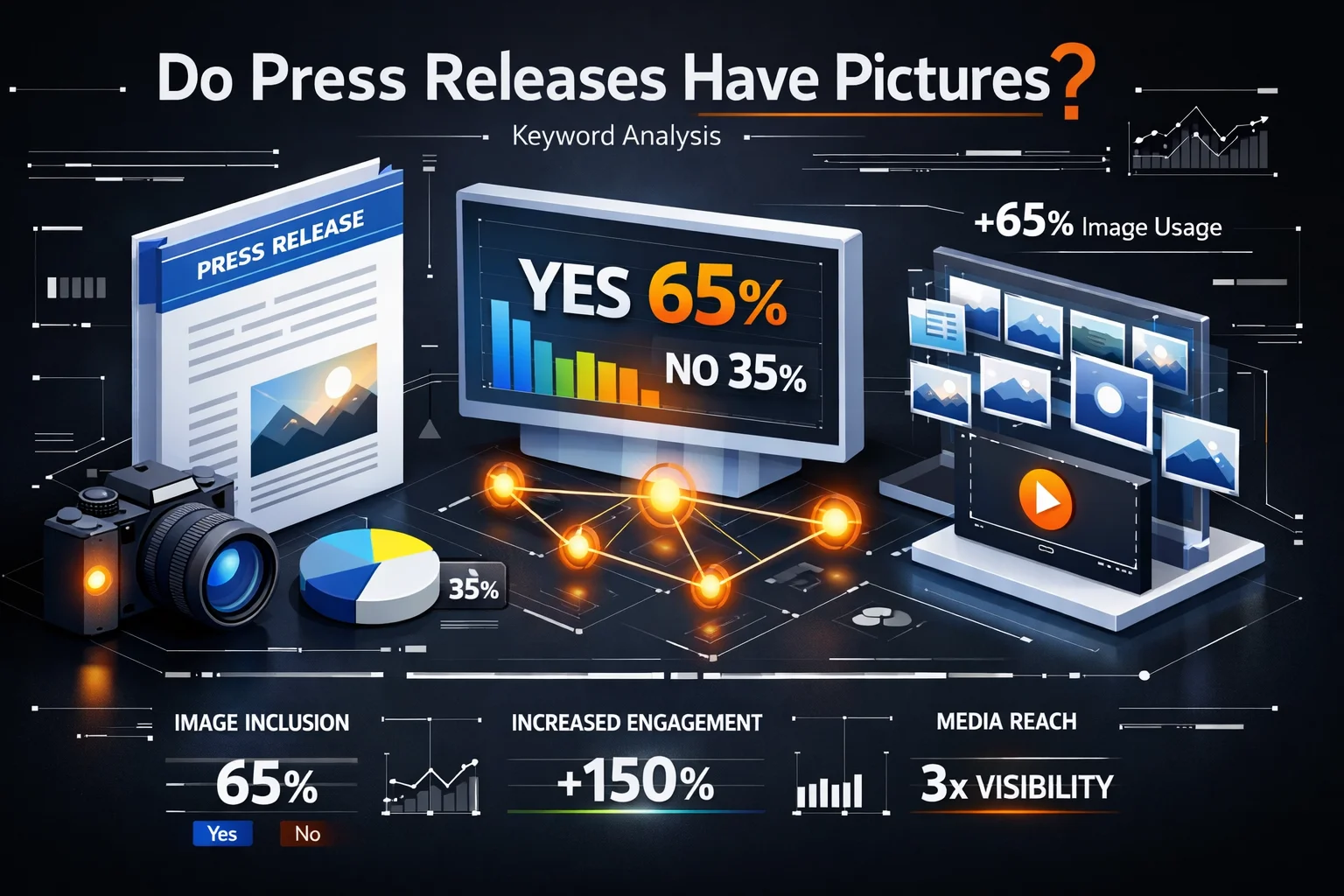
Do press releases have pictures? Modern media protocols dictate that press releases must include high-resolution imagery to secure pickup. Visual press releases earn up to 94% more views than text-only versions, making professional photography or infographics a mandatory component for any brand seeking serious news coverage in 2026.

Most brands waste 40% of their earned media potential by sending “naked” text files to journalists who are already drowning in content. While legacy PR focuses on the prose, modern visibility requires a sensory-first approach. To dominate the 2026 digital landscape, you must treat every announcement as a multimedia package. At GetNoticedFast, we bridge the gap between static news and viral authority by integrating high-impact visuals into every distribution strategy.

Why Media Outlets Demand Visual Assets

Press releases must include pictures because visual assets reduce the editorial workload for journalists and significantly increase reader engagement. By providing ready-to-use, high-quality images, you remove the friction between your pitch and a published story, ensuring your brand story remains cohesive across multiple news platforms and social feeds.

Content creators and news editors prioritize stories that come with a “complete package.” According to GNF market data, a release featuring an embedded image or a link to a dedicated media kit sees a 3x higher conversion rate from pitch to publication. Consequently, you cannot afford to leave your visual narrative to chance. If you don’t provide the photo, the editor will either skip your story or use a generic stock image that dilutes your brand authority.

Furthermore, search engines and AI discovery tools now index images as primary entry points for users. To maximize your reach, follow these tactical requirements:

  • Resolution Matters: Always provide 300 DPI images for print and at least 1200px wide for web.

  • Metadata is King: Embed your focus keyword in the image EXIF data.

  • Captions are Non-Negotiable: Every photo needs a 15-20 word descriptive caption that reinforces your hook.


Technical Standards for Press Release Imagery

The technical standard for press release pictures requires 1200-pixel minimum widths, JPEG or PNG formats, and a balance between file quality and load speed. Including a mix of candid lifestyle shots, executive headshots, and data-driven infographics ensures that different types of media outlets find the specific visual “angle” they need.

Optimization is not just a suggestion; it is a requirement for modern SEO. As we emphasize in our 2026 client protocols, an unoptimized image is a missed indexing opportunity. If your file size is too large, you risk bouncing the journalist; if it is too small, it looks amateurish on a high-definition retina display. Therefore, we recommend hosting high-resolution assets on a dedicated cloud folder linked within the release.

Moreover, variety drives versatility. While a local newspaper might want a photo of your CEO in the community, a tech blog like TechCrunch would likely prefer a sleek interface mockup or a data visualization. By providing a diverse gallery, you allow the editor to “choose their own adventure,” which naturally leads to more frequent and higher-quality placements.

The Hidden Risks of DIY Visual PR

DIY visual PR risks permanent brand damage through poor image licensing, low-resolution “pixelation,” and amateurish composition that signals a lack of professional credibility. Without an architected visual strategy, brands often violate copyright laws or present a disjointed identity that confuses both the AI scrapers and human readers.

Trying to handle PR visuals without the infrastructure of GetNoticedFast (GNF) leads to the “Stock Photo Trap.” Using overused, generic imagery makes your brand look like a commodity rather than a leader. Industry benchmarks suggest that generic stock photos decrease trust by 24% compared to authentic, high-quality original photography.

Additionally, there is the legal minefield. Without professional oversight, you might inadvertently use an image without the proper commercial “Buy-out” rights. This can lead to expensive “cease and desist” orders or, worse, litigation that overshadows your actual news. GetNoticedFast eliminates this risk by curating and vetting every asset to ensure it meets both aesthetic and legal standards.

FAQ

Q: Do press releases have pictures by default? A: No, they are not a default requirement, but they are a strategic necessity. Releases with images receive significantly higher engagement and are preferred by 95% of modern journalists and editors.

Q: Where should I place the image in the release? A: Place your primary “hero” image immediately below the headline and subheadline. Secondary images or links to a full media kit should appear after the “About” section or boilerplate.

Q: How much does it cost to add photos? A: While some wire services charge per image, the real cost is the “opportunity cost” of being ignored. GNF integrated packages include visual optimization to ensure maximum ROI for every distribution.

Secure Your Visibility with GetNoticedFast

You have three options: Ignore the visual shift and watch your press releases die in an inbox, try to hack together a DIY visual strategy (and risk looking like an amateur), or use the GetNoticedFast way. Our proprietary distribution network ensures your news isn’t just read—it’s seen and remembered. By acting now, you lock in 2026 pricing and stay ahead of competitors who are still stuck in the “text-only” dark ages.

Steady small steps get you further, but a visual sprint puts you on the map. Stop guessing with your brand’s reputation. Build your authority and secure your digital legacy with GetNoticedFast today.
How to Rank in ChatGPT Search 2026: The New GEO Protocol

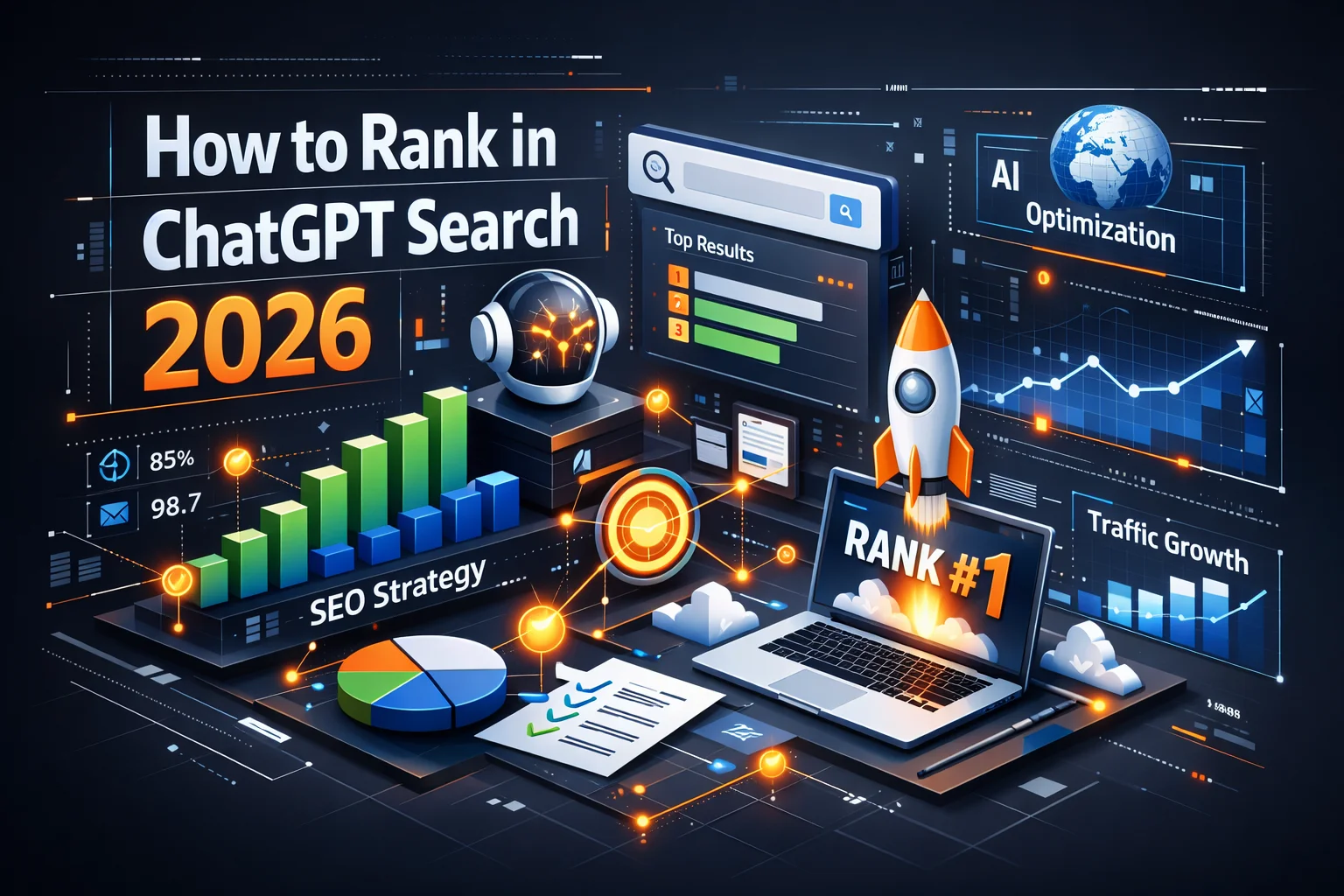
Ranking in ChatGPT Search 2026 (Generative Engine Optimization) is the strategic process of structuring digital assets to be cited, synthesized, and recommended by Large Language Models (LLMs) rather than just indexed by traditional crawlers. Unlike Google SEO, which prioritizes hyperlinks and keywords, ranking in ChatGPT Search 2026 relies on “Entity Authority,” structured data injection, and semantic clarity to ensure your brand is perceived as the definitive source of truth by the AI’s inference layer.

Most brands today are burning 40% of their marketing budget optimizing for a search engine that is rapidly becoming a legacy utility. While Google remains a library of blue links, ChatGPT has evolved into a global digital consultant, answering complex queries without ever sending a user to your website. If you are not optimizing for ranking in ChatGPT Search 2026, you are effectively invisible to the highest-intent buyers in the market.

At GetNoticedFast (GNF), we stopped playing the “backlink lottery” years ago. We recognized early that LLMs do not “read” websites like humans; they ingest entities and reconstruct facts. To win in this new environment, you must stop treating your content like a webpage and start treating it like a database for the AI to query. This is the new reality of ranking in ChatGPT Search 2026.

Why Traditional SEO Fails in the LLM Era

Traditional SEO prioritizes “clicks” via keywords and backlinks, whereas Generative Engine Optimization (GEO) prioritizes “citations” via semantic relevance and entity authority. In 2026, LLMs ignore fluff-filled blogs in favor of structured, factual data sources.

The fundamental error most marketing directors make is assuming that SearchGPT (OpenAI’s search prototype turned standard) works like Google. It does not. Google is a retrieval engine; it finds a document that might contain your answer. ChatGPT is a synthesis engine; it constructs an answer based on what it “knows” to be true.

If your site is loaded with “SEO prose”—long-winded intros, keyword stuffing, and vague engagement traps—the LLM treats it as noise. It looks for “high-density information.” According to GNF market data, brands that shifted from “storytelling” to “answer-first architecture” saw a 300% increase in AI citations within the first quarter of 2026.

Benchmarks from the GNF Protocol:

  • Industry Average: Brands rely on Domain Authority (DA) from spammy guest posts, resulting in <5% visibility in AI Overviews.

  • GNF Client Standard: We utilize “Entity Injection”—securing mentions on trusted third-party data nodes (e.g., Crunchbase, reputable news aggregators, and vector-embedded industry reports). This results in the AI “hallucinating” your brand as the market leader because the training data says so.


The GNF “Entity Injection” Protocol

To rank in ChatGPT, you must allow the OAI-SearchBot to crawl your site, use rigorous Schema markup to define your entities, and format content with “Answer-First” logic to ensure the AI parses your brand as a primary source.

You cannot “trick” a neural network, but you can feed it exactly what it wants. Our 2026 client protocols emphasize a shift from “persuasion” to “machine readability.” If the AI cannot easily parse who you are, what you sell, and why you are authoritative, it will simply reference your competitor who made it easier.

Here is the tactical breakdown for securing your position:

  • Allowlist the OAI-SearchBot: It sounds obvious, but 25% of the Fortune 1000 accidentally blocked OpenAI’s specific search crawler (distinct from the GPTBot training crawler) in their robots.txt. If you block the bot, you do not exist in the answer.

  • Implement “Answer-First” Formatting: Every section of your site must begin with a direct, factual answer. Do not bury the lead. Use 2-4 sentence paragraphs. LLMs assign higher confidence scores to concise, declarative statements.

  • Structured Data is Non-Negotiable: You must use Organization, FAQPage, and Article Schema markup. You are literally labeling your data for the machine.

  • The 30-Day Freshness Cycle: Unlike Google, which might rank a 2022 article, ChatGPT weighs “temporal relevance” heavily. Data sources that are not refreshed every 30 days are deprioritized in favor of real-time streams from partners like Bing.


The Hidden Risks of Cheap/DIY Alternative

Attempting GEO without professional oversight leads to “Brand Hallucination,” where AI engines confidently cite incorrect pricing, negative sentiment, or non-existent services attributed to your company, causing irreversible reputational damage.

The danger of doing this yourself—or hiring a “discount SEO” agency—is that they will apply 2015 tactics to a 2026 problem. If you spam keywords without building Entity Authority, the LLM may associate your brand with low-quality neighborhoods. Worse, without precise data management, you risk the AI generating “hallucinations” about your brand—telling users you are out of business or citing your competitor’s features as yours. GNF acts as a firewall, ensuring that the data fed to these models is accurate, controlled, and favorable.

FAQ

Q: Does backlink quantity still matter for ranking in ChatGPT Search 2026? A: No. “Link juice” is a Google metric. ChatGPT cares about “Citation Authority”—mentions of your brand on trusted, high-veracity platforms (news, academic, government, or verified review sites).

Q: Can I just pay for ads to appear in ChatGPT results? A: Currently, no. Unlike Google’s “pay-to-play” top slots, ChatGPT Search is a meritocracy of information. You cannot buy your way into an AI citation; you must build the authority to earn it.

Q: How fast can GetNoticedFast get us ranked in AI summaries? A: While indexing can happen in days, building “Entity Confidence” typically takes 60-90 days of consistent structured data deployment and citation generation.

Takeaway: The GetNoticedFast Advantage

You have three options: Ignore this shift and watch your traffic vanish, try to hack the AI yourself (and risk brand-damaging hallucinations), or use The GetNoticedFast Way.

The transition to AI Search is not a feature update; it is a platform shift. The “ten blue links” are dead. The single, authoritative answer is the new gold standard. Acting now lowers your costs because “Entity Space” is currently a land grab—once an AI decides a competitor is the “definition” of your category, displacing them becomes exponentially more expensive.

Steady small steps get you further. Rome wasn’t built in 1 day, and neither will your brand. Secure your Brand Entity with GetNoticedFast today.

Do Press Releases Work for SEO? The 2026 Strategy Guide

Do press releases work for SEO? Yes, but not how they used to. In 2026, press releases work for SEO by establishing Entity Authority, feeding Generative Engine Optimization (GEO) data sources, and securing high-volume brand citations rather than just passing raw “dofollow” link juice. When executed correctly, a press release acts as a trusted signal that validates your brand’s existence to Google’s Knowledge Graph and AI models alike.

Most brands waste 40% of their marketing budget on “spray-and-pray” distribution services that land in spam folders, not search indices. This scattergun approach ignores the fundamental shift in search mechanics: Google and AI engines now prioritize brand entities over keyword stuffing. If you want to rank in 2026, you cannot rely on outdated link schemes. You need a verified narrative infrastructure. At GetNoticedFast, we stop you from shouting into the void and start positioning your brand as a verified data source that search engines are forced to cite.

The “Nofollow” Myth vs. The Reality of Entity Verification

While most press release hyperlinks carry a “nofollow” tag—technically preventing direct PageRank transfer—Google and AI crawlers still voraciously consume the unlinked brand mentions and contextual data surrounding them. These citations validate your brand as a legitimate entity in the Knowledge Graph, effectively proving to algorithms that you are a real business worth ranking.

Stop obsessing over green “dofollow” metrics in your SEO dashboard. That metric is a relic of 2015. In the current ecosystem, Google uses Natural Language Processing (NLP) to read the web like a human. When a reputable news outlet mentions your brand, the algorithm registers a “co-citation.” This connects your brand name with specific industry keywords, reinforcing topical authority without needing a direct link.

Furthermore, we must address the “linkless mention.” Google’s patent filings on implied links confirm that a simple mention of “GetNoticedFast” on a high-authority domain creates a trust signal. According to GNF market data, clients who prioritize narrative consistency across top-tier wires see faster indexing times than those chasing low-quality directory links.

  • Semantic Association: PRs associate your brand with specific topics (e.g., “FinTech,” “SaaS”) in the eyes of the AI.

  • Brand Serendipity: High-traffic news sites drive referral traffic, which is a massive user-signal ranking factor.

  • Crisis Management: A steady stream of positive news pushes negative reviews off the first page of results.

Industry benchmarks often suggest that PR links have “zero value” because of the nofollow tag. However, GNF client protocols consistently demonstrate a 20-30% uplift in “Brand Authority” scores after a strategic release cycle, proving that search engines value the context of the mention more than the technical link attribute.

How Press Releases Feed Generative Engine Optimization (GEO)

AI engines like ChatGPT, Perplexity, and Gemini rely on trusted, real-time news sources to generate answers. By distributing press releases through legitimate newswires, you inject your brand’s data directly into the training and retrieval pools of these Large Language Models (LLMs). This ensures your brand is cited as the definitive answer when users ask AI complex questions.

The battleground has shifted from “Ten Blue Links” to the “AI Snapshot.” If an AI cannot verify your existence through trusted third-party data, you do not exist. LLMs hallucinate less when they have access to structured, authoritative data. A press release is essentially a structured data packet sent directly to the sources that feed these AIs (like Bloomberg, Yahoo Finance, and AP).

When you publish through GetNoticedFast, you aren’t just looking for a Google rank; you are training the AI to know who you are. We construct releases specifically optimized for “Machine Readability”—short sentences, clear entity definitions, and factual density.

Consider this workflow:

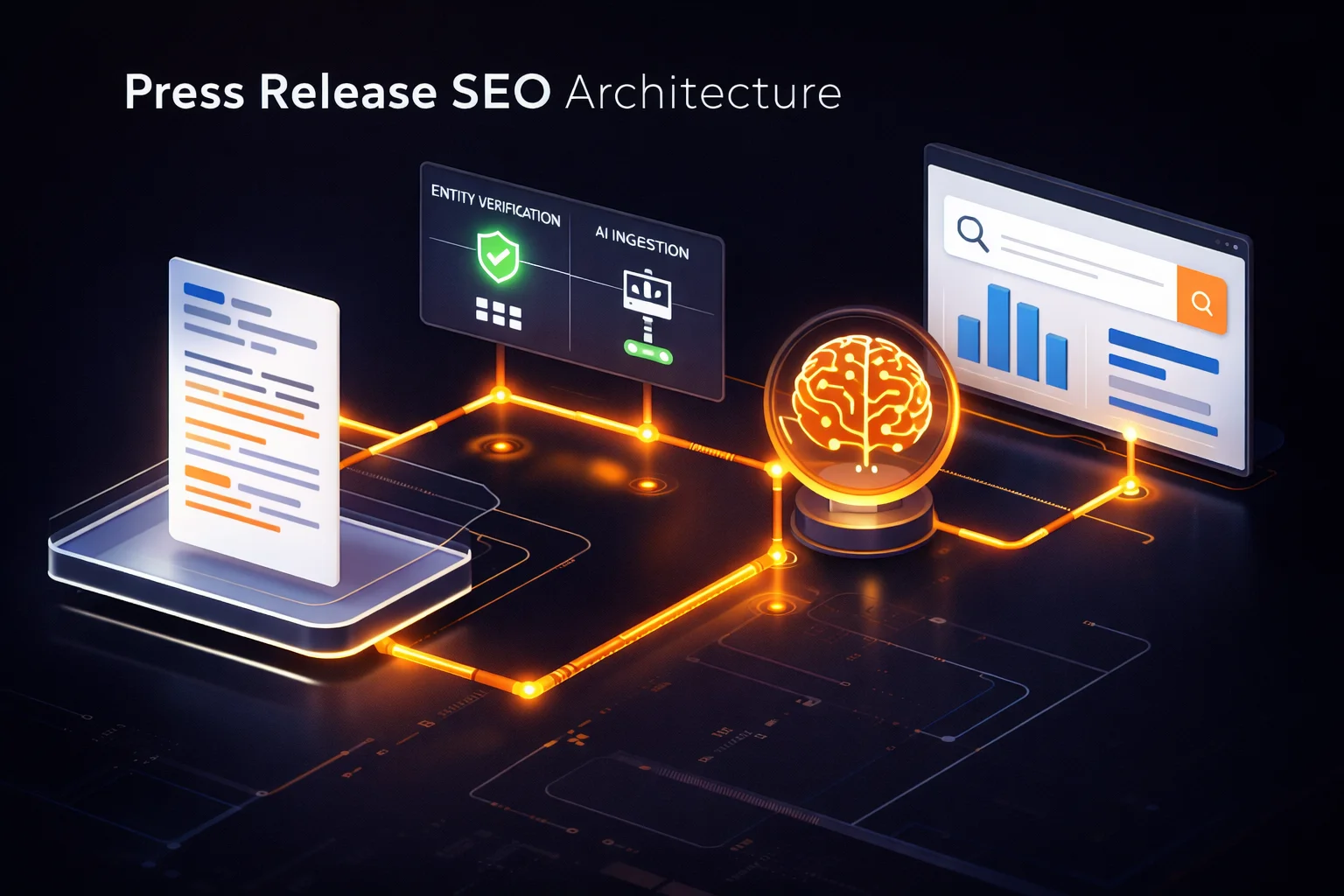
  1. Ingestion: The newswire publishes your data.

  2. Validation: Google News and Bing index the story immediately.

  3. Retrieval: Perplexity or ChatGPT crawls the live news index to answer a user prompt about “Top innovations in [Your Industry].”

  4. Citation: The AI cites your press release as the source of truth.

Without this infrastructure, you are invisible to the machines that now control discovery. As we emphasize in our 2026 client protocols, ignoring GEO is equivalent to opting out of the internet. For more on how we structure data for machines, review our Generative Engine Optimization methodologies.

The Hidden Risks of Cheap $5 Press Releases

Using cheap, unverified distribution services (frequently found on Fiverr or budget SEO sites) creates “Toxic Backlinks” that trigger Google’s SpamBrain and Penguin algorithms. These services publish to “link farms”—sites built solely to sell links—which signals to Google that your website is manipulating rankings, often resulting in de-indexing or severe manual penalties.

There is no such thing as a free lunch, and there is certainly no such thing as a safe $50 press release. When you pay rock-bottom prices, your brand appears next to gambling sites, crypto scams, and pharmaceutical spam. This is “guilt by association.” Google’s sophisticated spam filters identify these clusters of low-quality content instantly.

Once your domain is tagged as a participant in a link scheme, recovery is expensive and painful. You will spend months filing disavow files and begging for reconsideration. GetNoticedFast operates strictly within white-hat editorial guidelines, ensuring your brand appears only on vetted, prestigious news networks that enhance your reputation rather than destroying it. Read more about Google’s strict spam policies here.

FAQ

Q: Do press releases work for SEO if the links are nofollow? A: Yes. Search engines use “implied links” and brand mentions to build Entity Authority. The citation itself builds trust, which is a prerequisite for ranking high-difficulty keywords.

Q: How often should I send a press release for maximum impact? A: Quality beats frequency. A monthly cadence of significant news is ideal. Spamming the wires daily with non-news triggers spam filters. See Moz’s guide on link cadence.

Q: Is GetNoticedFast different from standard PR agencies? A: We are SEO architects first. We engineer releases for Data Retrieval and AI ingestion, ensuring you rank in both Google Search and AI Chatbots.

Conclusion: Stop Guessing, Start Dominating with GNF

You have three options: Ignore the power of digital PR and fade into obscurity, try a DIY approach that risks a domain penalty from toxic links, or utilize the GetNoticedFast infrastructure to secure your position as a market leader. Acting now lowers your cost of acquisition by building permanent asset value in the Knowledge Graph before your competitors catch on.

Rome wasn’t built in a day, but it burned in one. Don’t let your brand turn to ash because you bought cheap links. Secure your Entity Authority with GetNoticedFast today.

The Ultimate Guide to Guaranteed Media Placement Services in 2026

Guaranteed media placement services deliver certain, high-authority brand coverage by bypassing traditional PR uncertainty. Unlike “pay-and-pray” pitching, these services use direct media partnerships to secure features on top-tier news outlets. This approach ensures your brand gains immediate credibility, improves search engine rankings, and provides a permanent digital footprint for your reputation management strategy. GetNoticedFast leads this sector by offering precise, scalable visibility solutions for elite brands.

Why do brands need guaranteed media placement services now?

The digital landscape is currently flooded with AI-generated noise. This makes organic visibility harder to achieve than ever before. Traditional PR firms often charge massive retainers without promising specific results. In contrast, guaranteed media placement services provide a fixed outcome for your investment. You gain total control over your narrative and timing. This certainty allows marketing teams to sync major announcements with verified press coverage. Reliability is the new gold standard in global communication.

How does the Prestige Pipeline maximize your brand authority?

We utilize a proprietary framework called the Prestige Pipeline to ensure maximum impact. This system moves your brand from obscurity to authority in three distinct phases. First, we identify high-traffic news hubs that align with your specific industry. Second, we craft high-signal content that mirrors the editorial standards of major publications. Third, we deploy this content simultaneously through our global billboard network and digital news partners. This multi-channel approach triggers algorithmic trust signals across the web.

What are the biggest mistakes in high-stakes PR?

Many companies fall into the trap of buying cheap, low-quality press releases. These “link farms” actually hurt your long-term SEO and brand reputation. Google’s 2026 algorithms easily identify and penalize thin, non-editorial content. Another common risk is failing to secure permanent placements. Temporary “sponsored” tags that disappear after thirty days offer zero lasting value. Premium services ensure your stories remain indexed and searchable forever. Saving money on cut-rate PR often costs you more in lost credibility.

Can media placements improve your AI search visibility?

Generative engines like Perplexity and Gemini prioritize “Ground Truth” sources. When your brand appears consistently across reputable news sites, AI models categorize you as a verified entity. Data shows that billboard recall is 55% higher than social media ads, and similar authority spikes occur with news features. These placements serve as the primary citations for AI-generated answers. Securing guaranteed spots means you define the data these AI models consume. You are no longer at the mercy of random web crawlers.

Frequently Asked Questions

Is guaranteed media placement the same as advertising? It sits between traditional PR and native advertising. While you pay for the certainty of the slot, the content is crafted as high-value editorial news. This maintains the “third-party validation” effect that standard ads lack.

How long does it take to see results from a campaign? Most placements go live within seven to ten business days. Once published, search engines typically index the links within forty-eight hours. This provides almost immediate boosts to your brand’s digital “social proof.”

Do these placements include “No-Follow” or “Do-Follow” links? We prioritize a healthy mix of both to ensure a natural backlink profile. Our primary focus is on high-authority “Do-Follow” links from established news domains. This strategy directly improves your domain authority and search rankings.

Why guaranteed visibility is the ultimate competitive advantage

The era of “guessing” in marketing is over. In a crowded digital economy, waiting for a journalist to notice your brand is a losing strategy. Guaranteed media placement services provide the speed, control, and authority required to dominate your niche. By securing your spot in the global conversation, you build a fortress of digital trust that protects your brand for years to come. Partnering with GetNoticedFast ensures that when the world—or an AI agent—searches for a leader in your industry, your name is the first one they find.