Discover the Power of PR: The Best Agencies for Startups in 2026

This article provides an overview of public relations (PR) agencies specializing in services for startup companies, with a focus on trends and notable agencies heading into 2026. Understanding the role of PR is crucial for a nascent company, as it often determines initial market perception and trajectory.

The Strategic Importance of PR for Startups

For a startup, PR is not merely about generating buzz; it is about building a foundation of credibility and trust. In a crowded marketplace, PR acts as a compass, guiding your narrative through the noise and directly to your target audience. It is an investment in your company’s future, influencing everything from investor relations to talent acquisition. Without a structured PR approach, your innovative product or service risks remaining a well-kept secret.

Building Brand Identity and Awareness

A startup’s brand identity is its initial handshake with the world. PR agencies assist in articulating this identity, ensuring it resonates with your desired market. This involves crafting compelling narratives, developing key messaging, and strategically disseminating information. Awareness is the first step towards adoption, and PR provides the loudspeakers.

Attracting Investment and Talent

Investors are drawn to companies with a strong public profile and a clear, communicated value proposition. PR can significantly enhance a startup’s attractiveness to venture capitalists and angel investors by showcasing market validation, thought leadership, and growth potential. Similarly, top talent is often attracted to companies with a positive reputation and a clear vision, elements that effective PR cultivates.

Crisis Management and Reputation Protection

Every company, especially a startup navigating uncharted waters, faces potential reputational pitfalls. A robust PR strategy includes provisions for crisis management. This foresight allows a startup to address negative situations promptly and transparently, mitigating damage and protecting its nascent brand. Think of it as an insurance policy for your public image.

Key Trends Shaping Startup PR in 2026

The PR landscape is dynamic, continually evolving alongside technology and media consumption habits. Agencies specializing in startups must remain agile, incorporating emerging trends into their strategies to deliver effective results.

Data-Driven PR and Analytics

In 2026, PR is increasingly underpinned by data. Agencies are leveraging sophisticated analytics tools to identify target audiences, track campaign performance, and refine strategies. This shift from gut-feeling to empirical evidence allows for more precise targeting and measurable outcomes, demonstrating return on investment (ROI) more concretely.

Embrace of AI and Automation

Artificial intelligence (AI) is transforming various aspects of PR. AI-powered tools assist in media monitoring, content personalization, and even identifying media opportunities. While human strategists remain indispensable, AI augments their capabilities, allowing for greater efficiency and scalability, which is particularly beneficial for resource-constrained startups.

Hyper-Personalized Storytelling

Generic press releases have diminished efficacy. Modern PR emphasizes hyper-personalized storytelling, tailoring narratives to specific journalists, influencers, and audience segments. This approach fosters deeper engagement and increases the likelihood of media pickup, turning broad announcements into targeted conversations.

Integrated Digital PR Strategies

The lines between traditional PR, social media, content marketing, and SEO continue to blur. Effective startup PR in 2026 demands an integrated digital strategy where all communication channels work in concert. A press release about a funding round, for instance, should be amplified across social media, optimized for search engines, and inform related blog content.

Selecting the Right PR Agency: Crucial Considerations

Choosing a PR agency is a critical decision for any startup. It’s akin to selecting a co-pilot for your journey; their expertise and alignment with your vision can dictate the success of your flight. Assess agencies based on several key criteria.

Industry Expertise and Niche Focus

Does the agency possess a deep understanding of your industry? A PR firm specializing in SaaS companies brings different insights and connections than one focused on biotech. Their existing relationships with relevant journalists and influencers can significantly accelerate your outreach. Look for agencies that speak your industry’s language.

Proven Track Record with Startups

Examine their portfolio. Have they successfully launched and scaled other startups? Case studies and client testimonials provide valuable evidence of their capabilities. A track record with startups indicates an understanding of the unique challenges and opportunities inherent in new ventures, such as limited budgets, rapid growth, and evolving messaging.

Measurement and Reporting Capabilities

Transparency in reporting is paramount. How do they measure success? What metrics do they track? Ensure the agency provides clear, regular reports on campaign performance, demonstrating how their efforts translate into tangible results for your business. This allows you to evaluate their effectiveness and adjust strategies as needed.

Cultural Fit and Communication Style

The PR agency will be an extension of your team. A good cultural fit translates to smoother collaboration and more effective communication. Evaluate their responsiveness, proactiveness, and whether their communication style aligns with yours. In a startup environment, agile and direct communication is often preferred.

Notable PR Agencies for Startups in 2026

While a definitive “best” list is subjective and constantly evolving, these agencies represent a cross-section of firms recognized for their work with startups, their innovative approaches, or their strong industry focus. This is not an exhaustive list but rather a selection to illustrate the diversity of options available.

TECH PR Specialists

These agencies focus specifically on technology startups, often possessing deep industry connections within the tech media landscape.

  • Hotwire: Known for its global reach and experience with both nascent and established tech companies. Their approach often integrates digital marketing with traditional media relations.
  • Inkhouse: An agile firm with a strong reputation for working with disruptors and innovators in various tech sectors. They emphasize data-driven strategies and compelling storytelling.
  • Clarity: Offers a blend of traditional PR and digital services, with a strong focus on emerging technologies and a global network. They prioritize measurable outcomes for their clients.

Generalist Agencies with Startup Divisions

Larger, more established agencies often have dedicated divisions or teams that cater specifically to the needs of startups, offering broader resources.

  • FleishmanHillard (via FH TRUE Initiative): While a global giant, their FH TRUE initiative focuses on advising and partnering with startups and growth-stage companies. They bring the resources of a large firm with a tailored approach.
  • Edelman (via specialized teams): Similarly, Edelman,

one of the world’s largest PR firms, has teams experienced in assisting startups across various sectors. Their scale allows for specialized expertise in diverse markets.

Boutique and Niche Agencies

These smaller firms often offer a more personalized approach and can specialize in particular industry verticals or types of startups.

  • Mission North: Recognized for its strategic approach to PR, particularly in the B2B tech and venture capital space. They emphasize thought leadership and executive profiling.
  • SourceCode Communications: A modern, integrated communications agency with a strong focus on startups and challenger brands. They are known for their creative campaigns and digital prowess.
  • The Hoffman Agency: With a strong presence in Silicon Valley and Asia, they are adept at helping tech startups navigate both domestic and international markets. Their global footprint is a significant asset.

The Future Landscape of Startup PR

Rank Agency Name Location Specialization Clientele
1 PR Prodigy New York, USA Tech Startups Uber, Airbnb, Dropbox
2 Startup Savvy PR San Francisco, USA Consumer Brands Spotify, Casper, Warby Parker
3 LaunchPad Communications London, UK Healthcare Startups Babylon Health, Hinge Health, Thriva
4 Ignite PR Los Angeles, USA Fashion and Beauty Revolve, Glossier, Fenty Beauty
5 Innovate Media Relations Berlin, Germany Food and Beverage HelloFresh, Oatly, BrewDog

As we move past 2026, the intersection of technology, media, and business will continue to redefine startup PR. The emphasis will remain on authenticity, measurable impact, and the ability to cut through an increasingly dense information environment.

Rise of Influencer and Micro-Influencer Relations

The power of traditional media outlets continues to be significant, yet the landscape of influence is expanding. Agencies will increasingly focus on strategic partnerships with relevant influencers and micro-influencers who command niche, engaged audiences. These individuals act as amplifiers, extending your message to communities that might be difficult to reach through traditional channels. For a startup, identifying and cultivating these relationships is like planting small, powerful seeds in fertile ground.

Content as the Cornerstone of Strategy

“Content is king” is an adage that remains relevant. High-quality, informative, and engaging content will be more crucial than ever for startups. PR agencies will evolve further into content strategists, helping companies produce everything from thought leadership articles and whitepapers to compelling video content and captivating social media narratives. This content serves as the raw material for media outreach and direct audience engagement, forming the bedrock of your online presence.

Proactive Storytelling and Thought Leadership

Rather than simply reacting to news cycles or product launches, the future of startup PR leans heavily towards proactive storytelling and the establishment of thought leadership. This involves positioning key personnel as experts within their fields, contributing to industry discourse, and shaping conversations around your company’s vision and innovations. By establishing themselves as authorities, startups can attract attention, build trust, and influence market perceptions long before a product even hits the shelves. It’s about becoming a lighthouse, not just a ship passing in the night.

Agility and Adaptability in a Dynamic Market

The startup environment is inherently volatile. Market conditions can shift rapidly, competitive landscapes evolve, and technological advancements emerge at an accelerated pace. PR agencies serving startups must embody agility and adaptability. Strategies need to be fluid, capable of being adjusted in real-time to respond to new opportunities or challenges. This demands continuous monitoring of market trends, competitor activities, and media sentiment. A static PR plan in a dynamic market is like using a fixed map to navigate a shifting labyrinth—it will quickly lead you astray.

Conclusion

The role of PR for startups in 2026 and beyond is multifaceted and indispensable. It is the engine that propels a company’s narrative, builds its reputation, and connects it with crucial stakeholders. Selecting the right PR agency is not a trivial task; it requires diligent research, a clear understanding of your needs, and an alignment on strategic vision. By focusing on agencies with proven expertise, a data-driven approach, and an adaptable methodology, you can empower your startup to navigate the complex media landscape, establish a credible presence, and achieve its growth objectives. Treat your PR strategy as a foundational pillar, not an afterthought.

FAQs

What is PR and why is it important for startups?

PR, or public relations, is the practice of managing the spread of information between an individual or an organization and the public. It is important for startups as it helps to build and maintain a positive image, create brand awareness, and establish credibility in the market.

What can a PR agency do for a startup?

A PR agency can help a startup with media relations, content creation, event planning, crisis management, and overall brand strategy. They can also assist in securing media coverage and managing the startup’s reputation.

How can a startup choose the best PR agency for their needs?

Startups should consider the PR agency’s experience in their industry, their track record of success, their understanding of the startup’s goals, and their ability to provide personalized attention and strategic guidance.

What are some of the best PR agencies for startups in 2026?

Some of the best PR agencies for startups in 2026 include those with a strong track record of success in working with startups, a deep understanding of the startup ecosystem, and a proven ability to generate impactful media coverage and brand awareness.

How can PR help startups in 2026 navigate the digital landscape?

PR can help startups navigate the digital landscape by leveraging social media, influencer partnerships, and digital storytelling to reach and engage with their target audience. Additionally, PR agencies can assist startups in managing their online reputation and addressing any digital crises that may arise.
Mastering the Art of Online Visibility: Quick Tips for Success

Online Visibility: An Introduction

Online visibility refers to the degree to which a website, brand, or individual can be found through search engines and other digital channels. In the contemporary digital landscape, strong online visibility is often a prerequisite for achieving various objectives, including business growth, brand recognition, and personal influence. This article provides practical guidance for improving online visibility, outlining key strategies and tactics.

The Landscape of Online Search

The internet has become the primary source of information for many individuals. Search engines, such as Google, Bing, and DuckDuckGo, act as gatekeepers to this information. Users typically employ keywords and phrases to locate relevant content. Therefore, understanding how these search engines function is fundamental to enhancing online visibility. Algorithms, the complex sets of rules that govern search engine rankings, analyze numerous factors to determine a page’s relevance and authority.

The Importance of a Strategic Approach

Random acts of digital publishing are unlikely to yield significant results. A strategic approach involves defining clear objectives, identifying target audiences, and developing content that resonates with those audiences. This foundational planning prevents wasted effort and maximizes the impact of subsequent actions.

Search Engine Optimization (SEO) Fundamentals

Search Engine Optimization (SEO) is the process of improving a website’s ranking in search engine results pages (SERPs). The goal of SEO is to increase organic (unpaid) traffic to a website. SEO is a continuous process, not a one-time task. Search engine algorithms evolve, and competition for online visibility remains high.

Keyword Research and Selection

Keywords are the cornerstone of effective SEO. They represent the words and phrases that potential visitors use to find information. Thorough keyword research involves identifying relevant terms with a reasonable search volume and manageable competition. This is akin to a prospector searching for gold; you need to identify veins that are rich but not already mined to exhaustion. Tools such as Google Keyword Planner, Ahrefs, and Semrush can assist in this process. Consider both short-tail keywords (broad terms like “marketing”) and long-tail keywords (more specific phrases like “digital marketing strategies for small businesses”). Long-tail keywords, while having lower search volume, often indicate higher user intent and can lead to more qualified traffic.

On-Page SEO Best Practices

On-page SEO refers to optimizations made directly on a website’s pages. These elements are under your direct control and significantly influence how search engines perceive your content.

Content Quality and Relevance

High-quality, informative, and engaging content is paramount. Search engines prioritize content that genuinely answers user queries and provides value. Duplicate content, thin content, or content solely designed for keyword stuffing will likely be penalized. Think of your content as a well-constructed bridge; it needs to be strong, reliable, and get people to their desired destination efficiently. Ensure your content is accurate, well-researched, and regularly updated.

Title Tags and Meta Descriptions

The title tag is the clickable headline that appears in search results. It should be concise, compelling, and include your primary keyword. The meta description is the brief summary that appears below the title. While not a direct ranking factor, a well-crafted meta description can significantly improve click-through rates. These are your storefront windows; they need to entice people to enter.

Header Tags (H1, H2, H3, etc.)

Header tags structure your content, making it more readable for both users and search engines. The H1 tag should be reserved for the main title of the page. Subsequent subheadings (H2, H3, etc.) should logically break down your content. This hierarchical structure helps search engines understand the topic and subtopics of your page.

Image Optimization

Images can enhance user experience, but they can also slow down page load times if not optimized. Compress images to reduce file size without sacrificing quality. Use descriptive alt text for all images, incorporating relevant keywords. Alt text is crucial for accessibility and provides search engines with context about the image content.

Internal Linking

Internal links connect different pages within your website. They help distribute “link equity” (authority) throughout your site and guide users to related content. Strategic internal linking improves site navigation and reinforces topical relevance.

Technical SEO Considerations

Technical SEO focuses on the backend elements of your website that affect its crawlability and indexability by search engines.

Website Speed and Performance

Page load speed is a critical ranking factor and a significant determinant of user experience. Users are more likely to abandon slow-loading websites. Optimize images, leverage browser caching, and consider a Content Delivery Network (CDN) to improve speed.

Mobile Responsiveness

With a significant proportion of internet traffic originating from mobile devices, a mobile-responsive website is no longer optional. Google employs a mobile-first indexing approach, meaning it primarily uses the mobile version of your content for ranking.

XML Sitemaps

An XML sitemap is a file that lists all the important pages on your website, helping search engines discover and crawl your content more efficiently. Submit your sitemap to Google Search Console and Bing Webmaster Tools.

Robots.txt File

The robots.txt file is a directive for search engine crawlers, informing them which parts of your site they should or should not access. Use it to prevent crawlers from accessing redundant or sensitive content.

Content Marketing Strategies

Content marketing involves creating and distributing valuable, relevant, and consistent content to attract and retain a clearly defined audience. It is an integral component of a successful online visibility strategy.

Blog Posts and Articles

Regularly publishing high-quality blog posts and articles establishes your expertise and provides fresh content for search engines to index. Focus on topics that address your target audience’s pain points, questions, and interests. Think of your blog as a thought leadership hub, a place where you consistently demonstrate your value.

Video Content

Video content continues to grow in popularity. Platforms like YouTube are powerful search engines in themselves. Creating engaging video tutorials, product demonstrations, or informational clips can significantly expand your reach.

Infographics and Visual Content

Infographics present complex information in an easily digestible visual format. They are highly shareable and can attract backlinks, which are valuable for SEO. Other visual content, such as custom graphics and illustrations, can also enhance engagement.

Social Media Engagement

Social media platforms are not direct ranking factors for SEO, but they play a crucial role in amplifying content, driving traffic, and building brand awareness.

Platform Selection and Strategy

Not all social media platforms are suitable for every business or individual. Identify where your target audience spends their time and focus your efforts on those platforms. Develop a content strategy tailored to each platform’s unique characteristics. For example, LinkedIn is suitable for professional networking and business-related content, while Instagram thrives on visual aesthetics.

Consistent Activity and Engagement

Regularly post relevant content and actively engage with your audience. Respond to comments, answer questions, and participate in discussions. Social media is a two-way street; genuine interaction fosters community and builds loyalty.

Leveraging Influencers

Collaborating with influencers who have an established audience relevant to your niche can significantly expand your reach and credibility. Choose influencers whose values align with yours.

Building Authority Through Backlinks

Backlinks, also known as inbound links, are links from other websites to your website. They are a strong signal to search engines that your content is valuable and authoritative. Think of each backlink as a vote of confidence in your content from another established entity.

Ethical Link Building Practices

Focus on earning natural backlinks through high-quality content that others genuinely want to share and reference. Avoid black-hat SEO tactics like buying links or participating in link schemes, as these can lead to severe penalties from search engines.

Content Promotion and Outreach

Actively promote your content through social media, email newsletters, and outreach to relevant websites and publications. When reaching out, focus on providing value and explaining why your content would benefit their audience.

Guest Blogging

Writing guest posts for reputable websites in your niche can secure valuable backlinks and expose your content to a new audience. Ensure your guest posts are high quality and provide genuine value to the host site’s readers.

Broken Link Building

Identify broken links on other websites and suggest your relevant content as a replacement. This provides a solution to the website owner and earns you a backlink.

Monitoring and Analytics

Metrics Data
Website Traffic 5000 visitors per month
Conversion Rate 3%
SEO Ranking Page 1 for targeted keywords
Social Media Followers 10,000 followers

Successful online visibility is not a static state but an ongoing process of optimization. Regular monitoring and analysis of your performance are essential for making informed decisions.

Google Analytics

Google Analytics provides comprehensive data on website traffic, user behavior, and conversion rates. Use it to track key metrics such as unique visitors, page views, bounce rate, and time on page. This data reveals what’s working and what needs improvement.

Google Search Console

Google Search Console (formerly Webmaster Tools) offers insights into how your website performs in Google search results. It reports on search queries, impressions, clicks, and average position. It also helps identify technical issues that might be hindering your visibility.

Competitor Analysis

Regularly analyze your competitors’ online visibility strategies. Identify their strengths and weaknesses, and learn from their successes and failures. This competitive intelligence can inform your own strategies.

Adjusting Your Strategy

Based on your analytical findings, be prepared to adjust your online visibility strategy. The digital landscape is dynamic, and continuous adaptation is necessary to maintain and improve your standing. This iterative process, like the constant adjustment of a ship’s rudder, ensures you stay on course toward your objectives.

By consistently applying these principles, you can significantly enhance your online visibility, connect with your target audience, and achieve your digital objectives. The path to strong online visibility is a marathon, not a sprint, requiring dedication, continuous learning, and a commitment to providing value.

FAQs

What is online visibility?

Online visibility refers to how easily a website or online content can be found and accessed by internet users. It encompasses factors such as search engine rankings, social media presence, and overall online reputation.

Why is online visibility important?

Online visibility is crucial for businesses and individuals looking to reach their target audience and achieve their goals. It can lead to increased website traffic, brand awareness, customer engagement, and ultimately, business success.

What are some quick tips for improving online visibility?

Some quick tips for improving online visibility include optimizing website content for search engines, creating and sharing high-quality content on social media, engaging with online communities, and building backlinks from reputable websites.

How can search engine optimization (SEO) help improve online visibility?

SEO involves optimizing a website’s content, structure, and other elements to improve its visibility in search engine results. By implementing SEO best practices, websites can rank higher in search results and attract more organic traffic.

What are some common mistakes to avoid when trying to improve online visibility?

Common mistakes to avoid when trying to improve online visibility include neglecting website performance and user experience, using black hat SEO tactics, and failing to monitor and analyze the impact of online visibility efforts.

The Ultimate Guide: When to Send a Press Release for Maximum Impact

You have a groundbreaking announcement. The copy is polished, the quotes are powerful, and your team is ready. But now you are staring at the “Submit” button, asking yourself the critical question that plagues every marketing professional: When to send a press release?

Is Tuesday really better than Monday? Does the time zone matter? What if you are in a niche industry like Crypto or Pharma?

At GetNoticedFast.com, we understand that timing isn’t just a detail—it is a strategy.  A press release sent at the wrong time risks getting buried in a journalist’s overflowing inbox. Sent at the right time, however, it can spark a media firestorm, drive traffic, and boost your SEO rankings.

Whether you are a marketing director or a business owner, this guide will cut through the noise and give you the definitive answer on when to distribute your news.


The “Golden Window”: Best Days to Send a Press Release

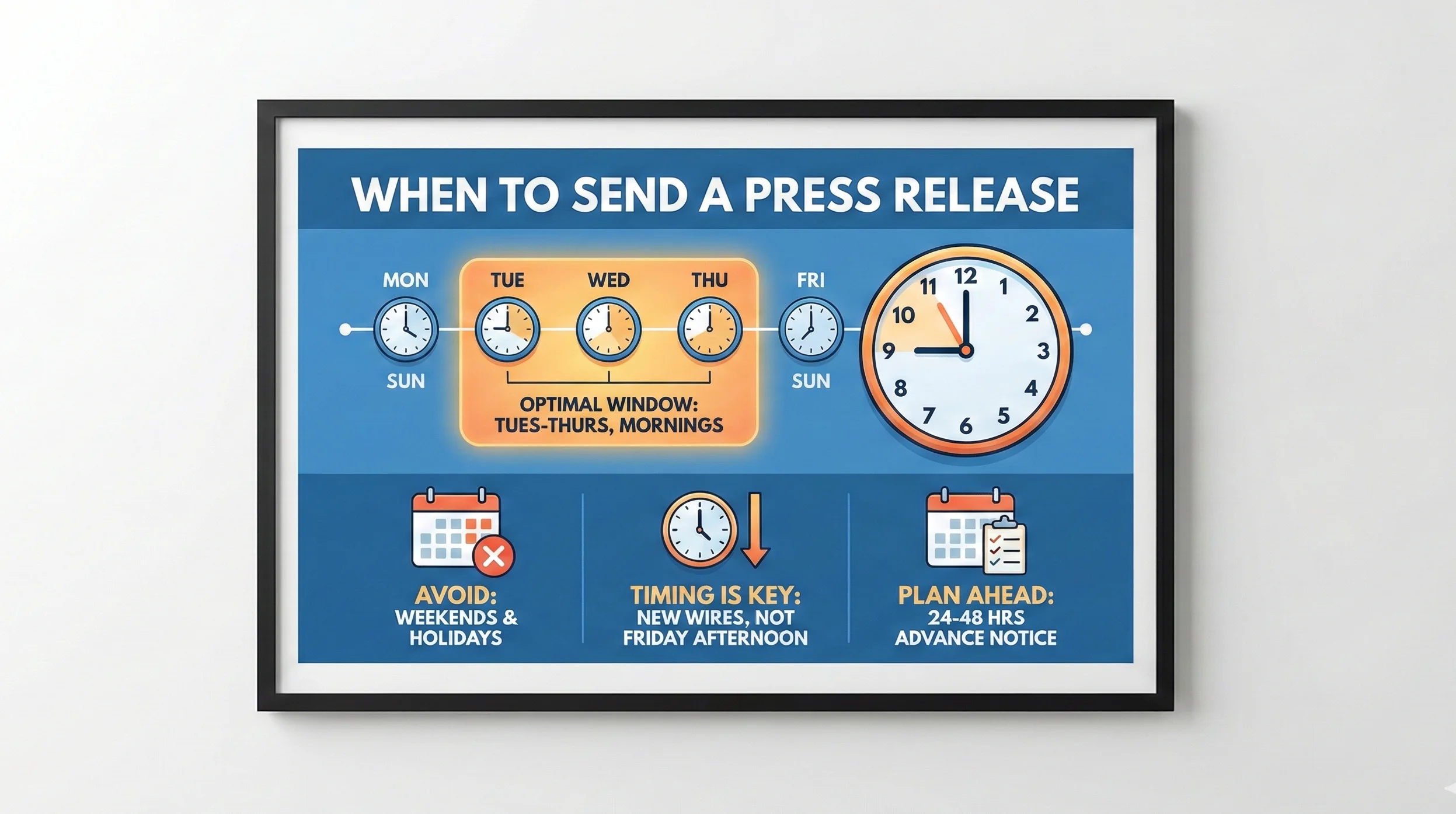
If you are looking for the short answer, here it is: The consensus among PR professionals is that Tuesday, Wednesday, and Thursday are the most effective days to send a press release.

However, to truly dominate the news cycle, you need to understand why these days work and why others don’t.

Why Tuesday is King

Tuesday is widely considered the sweet spot. By Tuesday, journalists have cleared their weekend backlog (from Monday) and are actively looking for stories to fill their week. Sending your PR on a Tuesday morning maximizes the chances of it being picked up and syndicated while the work week is still young.

Why You Should Avoid Mondays and Fridays

  • The Monday Slump: Editors walk into the office on Monday with hundreds of unread emails from the weekend. Your press release is likely to be archived or deleted in the mass “cleanup.”

  • The Friday Graveyard: In the PR world, Friday is known as the day companies send news they want to hide. Journalists are wrapping up their week and looking toward the weekend. Unless you are managing a crisis and want the story to die quietly, avoid Fridays.

Pro Tip: If you must launch late in the week, ensure your subject line is irresistible. But for standard announcements, stick to the mid-week “Golden Window.”


The Perfect Time on the Clock

Knowing the day is half the battle; knowing the hour is the other.

The general rule of thumb for the US market is to send your release between 9:00 AM and 10:00 AM Eastern Standard Time (EST) or shortly after the markets open.

Why Time Zones Matter

Since GetNoticedFast.com services both the US and global markets, you must consider geography.

  • US National News: Stick to EST. New York is the media capital of the US. If you send at 9 AM PST (Los Angeles time), it is already noon in New York, and editorial meetings are over.

  • International Reach: If you are targeting London or Europe, you need to send your release by 3:00 AM or 4:00 AM EST to hit their morning news cycle.

The Advantage of “Immediate Release”

While some agencies love complex embargoes, in the digital age, speed is currency. At GetNoticedFast, we generally recommend Immediate Release or a strictly Planned Release that goes live the moment the wire approves it.

Why? Because the news cycle is 24/7. Waiting for an arbitrary time often means a competitor might beat you to the punch. Our platform is built to facilitate this speed, ensuring your news goes live while it is still fresh.


Industry Nuances: One Size Does Not Fit All

One of the unique advantages of working with GetNoticedFast.com is our ability to handle a wide range of industries, including sensitive niches that other distributors reject, such as Crypto, Pharma, and Supplements.

The “Tuesday at 10 AM” rule applies to general business, but your specific industry might have its own rhythm:

  • Crypto & Web3: This industry never sleeps. Unlike the stock market, crypto is 24/7. While mid-week is still safe, “weekend dips” or Sunday evenings can actually be high-traffic times for crypto news consumption on Twitter/X and Telegram.

  • Pharma & Biotech: Timing here is strict. You generally want to coordinate releases with market opens or closes, especially if public stocks are involved.

  • Entertainment & Lifestyle: Late afternoon distributions can sometimes work here, as lifestyle bloggers often draft content in the evenings.


The “Omnichannel” Effect: Coordinating PR with Billboards

This is where expert marketing directors separate themselves from the amateurs. GetNoticedFast.com offers both Press Release distribution and Digital Billboard packages.

Ideally, your digital PR and your physical advertising should work in harmony. Here is how to time them together:

  1. Day 1 (The Tease): Launch your Digital Billboard campaign. This builds visual recognition and brand awareness in key cities.

  2. Day 2 (The Context): Send your Press Release. When people (and journalists) see the headline, their brains will make the connection: “Wait, I just saw this brand on a billboard yesterday.”

This psychological priming increases the trust factor and the click-through rate of your press release. By planning your release 24 hours after your billboard goes live, you create a multi-touchpoint brand experience.


Why Speed and Preparation Are Your Best Allies

Even if you know when to send a press release, you cannot hit that timing if your content gets stuck in “approval hell.”

Many competitors take days to review editorial content. At GetNoticedFast.com, we pride ourselves on agility.

  • Free Writing & Review: We don’t just distribute; we help you create. We offer free article writing and reviews prior to publication to ensure your content is compliant and punchy.

  • Faster Turnaround: We aim to review and approve quicker than the industry standard.

  • No “Taboo” Blocks: We accept legally compliant press releases for industries like CBD, Crypto, and Meds that often get flagged elsewhere, preventing unnecessary delays.


Summary Checklist: Before You Hit Send

Before you finalize your distribution on GetNoticedFast, run through this quick timing checklist:

  1. Is it a Tuesday, Wednesday, or Thursday? (Preferred)

  2. Is it between 9 AM and 10 AM EST? (For US/Global mix)

  3. Does the timing clash with a major holiday or tragedy? (Always check the news before sending).

  4. Is your landing page ready? Never send a release if your website can’t handle the traffic.

  5. Have you coordinated with other channels? (Social media, Billboards, Email newsletters).


Ready to Get Noticed?

Knowing when to send a press release is the first step. Having a partner who can get your news written, approved, and distributed to major networks quickly is the second.

Whether you are launching a new crypto token, announcing a corporate merger, or unveiling a new pharmaceutical product, GetNoticedFast.com is your trusted engine for visibility.

Don’t let your news sit in a draft folder. Let our team write your release for free, review it for impact, and send it out at the perfect time.

[Click here to view our Press Release & Billboard Packages]

How to Make a Press Release: The Ultimate Guide to Getting Guaranteed Coverage

In the digital age, a press release (PR) is more than just an announcement; it is a critical tool for SEO, brand authority, and immediate visibility. Yet, many business owners and marketing directors hesitate. They often ask, “How to make a press release that actually gets picked up?”

If you are looking to secure coverage on top-tier sites like Yahoo Finance or Bloomberg, simply writing a document isn’t enough. You need a strategy.

This guide will walk you through the exact process of crafting a professional press release, avoiding common rookie mistakes, and ensuring your news lands directly in front of your target audience.


Why You Need a Press Release Strategy Now

Before we dive into the “how-to,” let’s address the elephant in the room. Many decision-makers delay their PR campaigns because they believe “it’s too early” for their company to be newsworthy.

This is a dangerous myth.

Waiting until you are “big enough” often means you miss the growth phase where marketing matters most. Whether you are launching a startup, announcing a new hire, or releasing a product update, it is never too early to start marketing. A consistent stream of press releases builds a digital paper trail that investors and customers trust.

The benefits of a well-made PR include:

  • Instant SEO Value: High-quality backlinks from reputable news sites.

  • Brand Credibility: “As seen on” badges for your website.

  • Crisis Management: Controlling your own narrative.


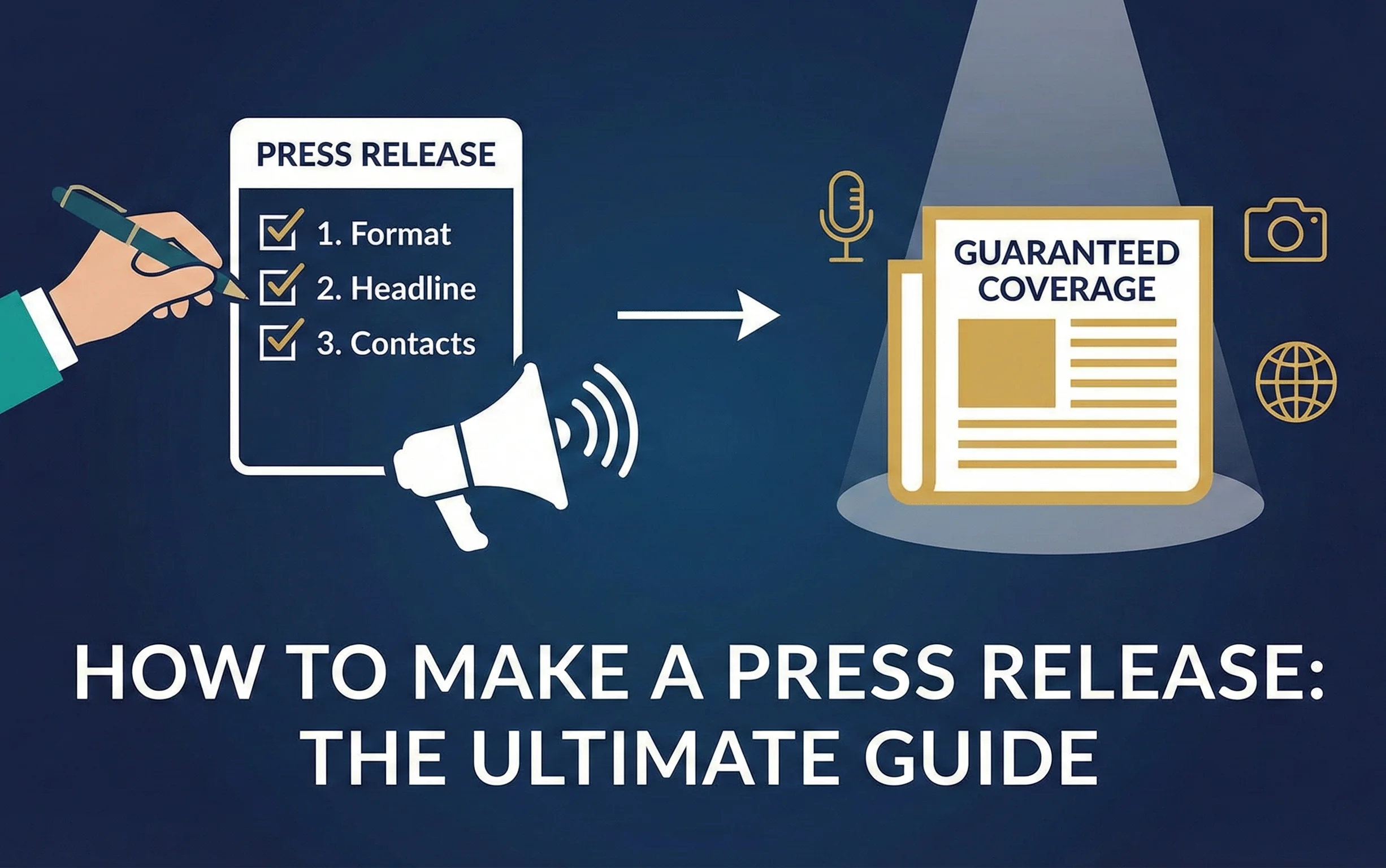
Step-by-Step: How to Make a Press Release

Writing a press release follows a specific journalistic formula. Journalists and news aggregators expect this format; deviating from it is the fastest way to get your submission rejected.

1. Find Your “Hook” (The Angle)

A press release is not an advertisement. It is news. If your PR sounds too “salesy,” it will likely be rejected by editorial teams.

  • Bad Angle: “We sell the best shoes, buy them now!”

  • Good Angle: “GetNoticedFast.com Announces Revolutionary Eco-Friendly Shoe Line That Reduces Carbon Footprint by 40%.”

2. Craft an Irresistible Headline

Your headline is the only thing 80% of people will read. It must be under 100 characters, punchy, and include your main keyword.

  • Pro Tip: Use action verbs. Instead of “New Software Available,” try “TechFirm Launches AI-Powered Software to Automate Payroll.”

3. The Dateline

This is standard formatting. It must appear at the very start of your first paragraph.

  • Format: CITY, State – Month Day, Year – [Your text begins here]

4. The Lead Paragraph (The 5 Ws)

Journalists use the “Inverted Pyramid” style. The most important info goes first. Your first sentence should answer:

  • Who is involved?

  • What is happening?

  • When is it happening?

  • Where is it taking place?

  • Why does it matter?

5. The Body Paragraphs

This is where you flesh out the details. To make your PR authoritative, include a quote from a senior executive or an industry expert.

“This launch represents a pivotal moment for our industry,” says [Name], CEO of [Company]. “We are solving a problem that has plagued marketers for a decade.”

6. The “About Us” (Boilerplate)

At the bottom of the release, include a standardized paragraph describing your company. Think of this as your permanent business card attached to the news.

7. Media Contact Information

Always include a real name, email address, and phone number. If a journalist wants to interview you, they need to know who to call immediately.


3 Critical Mistakes That Kill Press Releases

Through our experience at GetNoticedFast.com, we see hundreds of PR submissions. Here are the top reasons they fail to generate results:

  1. Non-Compliant Content: As mentioned, if your PR reads like a direct sales letter (“Buy 1 Get 1 Free!”), premium networks will block it. It must be informational.

  2. Ignoring Multimedia: Press releases with images or videos get up to 9.7x more views than text-only releases. Always include a logo or a product shot.

  3. Relying on “Free” Distribution: Posting a PR on your own blog is not distribution. If you want eyes on your content, you need to pay to access the networks that journalists actually read.


Distribution: The Secret to Guaranteed Placement

Knowing how to make a press release is only half the battle. The other half is distribution.

You can spend hours emailing individual journalists with no response, or you can use a professional distribution service.

At GetNoticedFast.com, we don’t just send emails into the void. We offer guaranteed placement. When you distribute through us, your news appears on high-authority financial and news outlets like Yahoo Finance, Bloomberg, MarketWatch, and hundreds of local news affiliates.

“What if I can’t write it myself?”

If you are a busy decision-maker, you might not have the time to draft the perfect hook. That is why we offer professional PR writing services. You provide the raw details; our expert editorial team crafts the perfect, compliant, and engaging story for you.


Pro Tip: Amplify with Multi-Channel Marketing

If you want to dominate your local market, don’t stop at digital news. Combine your Press Release with Digital Billboards.

Imagine a potential client reading about your company on a major news site in the morning, and then seeing your brand on a digital billboard on their commute home. This “omnichannel” approach cements your brand in their memory. GetNoticedFast.com specializes in bundling these high-impact assets to maximize your ROI.


Conclusion: Start Your Campaign Today

Understanding how to make a press release is a vital skill for modern marketing, but executing it correctly requires the right partner. Don’t let the fear of “being too early” stop you from building the brand authority you deserve.

Your competitors are already publishing news. It’s time you joined the conversation.

Ready to get noticed? Browse our Press Release Packages today to see how we can get you on Yahoo Finance and Bloomberg guaranteed.

Limited Time Offer: Use code GNF10 at checkout to receive a 10% discount on your first package.

The Power of Press Releases: How to Get Noticed in Mainstream Media

Press releases are an essential tool for businesses and organizations to communicate important news and information to the media and the public. They serve as a way to announce new products or services, share company milestones, and provide updates on industry trends. Press releases are also an effective way to build brand awareness and credibility, as they can help to position a company as an industry leader and expert in their field.

In addition to informing the media and the public about important developments within a company, press releases can also help to generate media coverage and increase visibility. When a press release is picked up by journalists and editors, it can result in valuable media exposure for a company, reaching a wider audience than traditional advertising. This can help to increase brand recognition and attract new customers or clients. Furthermore, press releases can also have a positive impact on search engine optimization (SEO), as they can help to improve a company’s online visibility and drive traffic to their website.

Crafting a Compelling Press Release

Crafting a compelling press release is essential for capturing the attention of journalists and editors. A well-written press release should be concise, informative, and engaging, with a clear and attention-grabbing headline. It should also include relevant quotes from company executives or experts, as well as supporting facts and statistics to back up any claims or announcements. Additionally, including multimedia elements such as images or videos can help to make a press release more visually appealing and increase its chances of being picked up by the media.

When writing a press release, it’s important to consider the target audience and tailor the messaging accordingly. Whether the press release is aimed at industry professionals, consumers, or the general public, the language and tone should be appropriate for the intended audience. It’s also important to adhere to journalistic standards and guidelines, ensuring that the information presented is accurate, newsworthy, and free from any bias or promotional language. By crafting a compelling press release that is well-written and targeted to the right audience, companies can increase their chances of securing media coverage and achieving their communication goals.

Identifying the Right Media Outlets

Identifying the right media outlets to distribute a press release is crucial for maximizing its impact and reaching the intended audience. Whether it’s industry-specific trade publications, local newspapers, national magazines, or online news websites, choosing the right media outlets can help to ensure that a press release is seen by the right people. It’s important to research and understand the target audience of each media outlet, as well as their editorial focus and content preferences. This can help to tailor the press release to fit the specific interests and needs of each outlet, increasing its chances of being picked up and published.

In addition to traditional media outlets, companies should also consider online platforms and social media channels as potential distribution channels for their press releases. With the rise of digital media, many journalists and editors are active on social media platforms such as Twitter, LinkedIn, and Facebook, making them valuable channels for sharing news and information. By identifying the right media outlets for distributing a press release, companies can increase their chances of securing media coverage and reaching their target audience effectively.

Building Relationships with Journalists and Editors

Building relationships with journalists and editors is an important part of successful media relations and can help to increase the chances of securing media coverage for a press release. By establishing trust and rapport with key members of the media, companies can position themselves as reliable sources of information and increase their chances of having their press releases picked up and published. This can be achieved through regular communication, providing valuable insights or exclusive content, and offering assistance with story ideas or interviews.

In addition to building relationships with individual journalists and editors, companies should also consider engaging with media outlets as a whole. This can involve attending industry events or networking opportunities, sponsoring relevant publications or programs, or offering exclusive access or content to specific media outlets. By building strong relationships with journalists and editors, companies can increase their chances of securing media coverage for their press releases and establishing themselves as trusted sources within their industry.

Leveraging Social Media and Online Platforms

Leveraging social media and online platforms is an effective way to amplify the reach and impact of a press release. In addition to traditional distribution channels such as newswires or email lists, companies should also consider sharing their press releases on social media platforms such as Twitter, LinkedIn, and Facebook. This can help to increase visibility and engagement, as well as reach a wider audience beyond traditional media outlets. Additionally, companies can also consider publishing their press releases on their own website or blog, making them easily accessible to stakeholders and interested parties.

In addition to sharing press releases on social media and online platforms, companies should also consider engaging with influencers or industry experts who can help to amplify their message. By partnering with influential individuals or organizations, companies can increase the reach and impact of their press releases, reaching new audiences and generating valuable exposure. Leveraging social media and online platforms can help to maximize the impact of a press release, increasing its visibility and engagement across different channels.

Measuring the Impact of Your Press Release

Measuring the impact of a press release is essential for evaluating its effectiveness and identifying areas for improvement. Companies should consider tracking key performance indicators such as media coverage, website traffic, social media engagement, and lead generation to gauge the success of their press release. By analyzing these metrics, companies can gain valuable insights into the reach and impact of their press release, as well as understand how it has contributed to their overall communication goals.

In addition to quantitative metrics, companies should also consider qualitative feedback from journalists, editors, and other stakeholders to understand the perception and impact of their press release. This can involve conducting surveys or interviews with key members of the media or industry professionals to gather insights into how the press release was received and whether it achieved its intended objectives. By measuring the impact of a press release, companies can gain valuable insights into its effectiveness and make informed decisions for future communication strategies.

Adapting to Changes in the Media Landscape

Adapting to changes in the media landscape is essential for staying relevant and effective in communicating news and information through press releases. With the rise of digital media and social platforms, companies should consider adapting their distribution strategies to reach new audiences and engage with different channels effectively. This may involve exploring new distribution channels such as podcasts or video platforms, as well as leveraging emerging technologies such as artificial intelligence or virtual reality to create more immersive and engaging content.

Furthermore, companies should also consider adapting their messaging and content to fit the evolving needs and preferences of journalists and editors. This may involve creating more visual or interactive content formats, providing exclusive access or insights, or tailoring content for specific platforms or audiences. By adapting to changes in the media landscape, companies can ensure that their press releases remain relevant and impactful in an ever-changing media environment.

In conclusion, press releases are an essential tool for businesses and organizations to communicate important news and information to the media and the public. By crafting compelling press releases, identifying the right media outlets, building relationships with journalists and editors, leveraging social media and online platforms, measuring impact, and adapting to changes in the media landscape, companies can maximize the reach and impact of their press releases effectively. Press releases remain a valuable communication tool in today’s digital age, helping companies to build brand awareness, generate media coverage, and engage with their target audience effectively.

Cracking the Code: Cheap and Effective Ways to Land Your Business in Mainstream Media Headlines

In today’s fast-paced digital world, the media landscape is constantly evolving. Traditional media outlets such as newspapers, magazines, and television stations are still important, but the rise of digital media has changed the way people consume news and information. Social media platforms, online news sites, and blogs have become major players in the media landscape, providing a wide range of opportunities for businesses and individuals to share their stories and connect with their target audiences.

It’s important to understand the different types of media outlets and how they operate. Each outlet has its own unique audience and editorial focus, so it’s essential to tailor your story to fit the specific needs and interests of each outlet. Understanding the media landscape also means staying up-to-date on current trends and best practices in media relations. This includes knowing how to effectively pitch stories to journalists, navigate the world of social media, and create engaging visual content that will capture the attention of your audience.

In addition to traditional and digital media outlets, it’s also important to consider the impact of influencers and thought leaders in your industry. These individuals have the power to shape public opinion and can be valuable allies in getting your story out to a wider audience. By understanding the media landscape and the various channels through which information is disseminated, you can better position yourself to craft a compelling story that will resonate with journalists and their audiences.

Crafting a Compelling Story

Crafting a compelling story is essential for capturing the attention of journalists and their audiences. A compelling story is one that is timely, relevant, and has a unique angle that sets it apart from other news stories. It should also be well-written, engaging, and provide value to the reader. When crafting your story, it’s important to consider the needs and interests of the audience you are trying to reach. What are their pain points? What information are they seeking? How can your story provide value to them?

In addition to being timely and relevant, a compelling story should also be authentic and transparent. Journalists and their audiences are looking for stories that are genuine and honest, so it’s important to be truthful and forthcoming in your storytelling. This means being open about any challenges or setbacks your business may have faced, as well as highlighting any successes or milestones you have achieved. By crafting a compelling story that is both authentic and transparent, you can build trust with journalists and their audiences, making it more likely that they will engage with your story and share it with others.

Finally, a compelling story should be tailored to fit the specific needs and interests of the media outlet you are targeting. This means doing your research and understanding the editorial focus of the outlet, as well as the types of stories they typically cover. By tailoring your story to fit the needs of the outlet, you can increase the likelihood that your story will be picked up and shared with their audience. Crafting a compelling story takes time and effort, but by doing so, you can increase your chances of getting media coverage and reaching a wider audience.

Building Relationships with Journalists

Building relationships with journalists is an essential part of successful media relations. Journalists are busy professionals who receive countless pitches and press releases every day, so it’s important to stand out from the crowd by building genuine, meaningful relationships with them. This means taking the time to get to know journalists on a personal level, understanding their beats and interests, and providing them with valuable information that is relevant to their work.

One way to build relationships with journalists is by engaging with them on social media. Many journalists are active on platforms such as Twitter, LinkedIn, and Instagram, so following them, sharing their content, and engaging in meaningful conversations can help you get on their radar. It’s also important to be respectful of their time and boundaries, so avoid bombarding them with pitches or requests for coverage. Instead, focus on building a genuine connection based on mutual respect and shared interests.

Another way to build relationships with journalists is by providing them with valuable information and resources that can help them do their jobs more effectively. This could include offering exclusive access to industry experts for interviews or providing them with data and insights that can help them develop compelling stories. By being a valuable resource for journalists, you can position yourself as a trusted ally in their work, making it more likely that they will turn to you for future stories and opportunities. Building relationships with journalists takes time and effort, but by doing so, you can increase your chances of getting media coverage and building a positive reputation within the industry.

Leveraging Social Media and Online Platforms

In today’s digital age, social media and online platforms have become powerful tools for reaching and engaging with audiences. These platforms provide businesses and individuals with a direct line of communication to their target audiences, allowing them to share news, updates, and stories in real-time. Leveraging social media and online platforms effectively requires a strategic approach that takes into account the unique characteristics of each platform, as well as the needs and interests of the target audience.

One of the key benefits of social media is its ability to facilitate two-way communication between businesses or individuals and their audiences. This means that businesses can use social media to not only share their stories but also engage in conversations with their followers, answer questions, and address concerns in real-time. By leveraging social media in this way, businesses can build stronger relationships with their audiences and create a sense of community around their brand or message.

In addition to two-way communication, social media also provides businesses with valuable data and insights that can help them better understand their audience’s needs and interests. By analyzing engagement metrics such as likes, shares, comments, and click-through rates, businesses can gain valuable insights into what types of content resonate with their audience and adjust their strategy accordingly. This data-driven approach can help businesses make more informed decisions about how to leverage social media effectively and reach their target audience in a meaningful way.

Online platforms such as blogs, podcasts, and video channels also provide valuable opportunities for businesses to share their stories in a more long-form format. These platforms allow businesses to dive deeper into their stories, provide more context and detail, and engage with their audience in a more immersive way. By leveraging online platforms effectively, businesses can create a multi-dimensional storytelling experience that captures the attention of their audience and provides them with valuable information that they can’t find elsewhere.

Utilizing Press Releases and Media Pitches

Press releases and media pitches are essential tools for getting your story out to journalists and securing media coverage. A well-crafted press release can provide journalists with all the information they need to write a compelling story about your business or message, while a carefully crafted media pitch can capture their attention and persuade them to cover your story. Utilizing press releases and media pitches effectively requires a strategic approach that takes into account the needs and interests of journalists as well as the unique characteristics of each outlet.

When crafting a press release, it’s important to keep it concise, informative, and newsworthy. A press release should provide journalists with all the essential details about your story, including who, what, when, where, why, and how. It should also be written in a clear, engaging style that captures the attention of journalists and makes them want to learn more. In addition to providing essential details about your story, a press release should also include quotes from key stakeholders or experts that provide additional context or insight into the story.

In addition to press releases, media pitches are another valuable tool for getting your story out to journalists. A media pitch is a personalized message that is sent directly to journalists or editors, outlining why your story is newsworthy and why they should cover it. When crafting a media pitch, it’s important to tailor it to fit the specific needs and interests of each journalist or outlet. This means doing your research and understanding what types of stories they typically cover, as well as what angles or perspectives are likely to resonate with their audience.

By utilizing press releases and media pitches effectively, businesses can increase their chances of securing media coverage and reaching a wider audience. These tools provide businesses with a direct line of communication to journalists and allow them to share their stories in a compelling way that captures the attention of journalists and their audiences.

Creating Engaging Visual Content

In today’s visually-driven world, creating engaging visual content is essential for capturing the attention of audiences and standing out in a crowded media landscape. Visual content such as photos, videos, infographics, and illustrations can help bring your story to life in a way that words alone cannot. By creating engaging visual content that complements your storytelling efforts, you can increase the likelihood that journalists will engage with your story and share it with their audiences.

When creating visual content, it’s important to consider the needs and interests of your target audience. What types of visual content are they most likely to engage with? What visual style or aesthetic resonates with them? By understanding the preferences of your audience, you can create visual content that is more likely to capture their attention and encourage them to engage with your story.

In addition to considering the needs of your audience, it’s also important to consider the needs of journalists when creating visual content. Journalists are often looking for high-quality visuals that complement their stories and provide additional context or insight into the topic at hand. By providing journalists with engaging visual content that enhances their storytelling efforts, you can increase the likelihood that they will cover your story and share it with their audience.

Creating engaging visual content takes time and effort, but by doing so, you can increase your chances of getting media coverage and reaching a wider audience. Visual content has the power to bring your story to life in a way that words alone cannot, making it an essential tool for capturing the attention of journalists and their audiences.

Measuring and Analyzing Media Coverage

Measuring and analyzing media coverage is an essential part of understanding the impact of your storytelling efforts and identifying areas for improvement. By tracking key metrics such as reach, engagement, sentiment, and share of voice, businesses can gain valuable insights into how their stories are resonating with journalists and their audiences. This data-driven approach allows businesses to make more informed decisions about how to leverage media coverage effectively and reach their target audience in a meaningful way.

One key metric for measuring media coverage is reach, which refers to the number of people who have been exposed to your story through various media outlets. By tracking reach metrics such as impressions or unique visitors, businesses can gain valuable insights into how far their stories are reaching and how many people are being exposed to their message. This data can help businesses understand which outlets or channels are most effective at reaching their target audience and adjust their strategy accordingly.

In addition to reach metrics, engagement metrics such as likes, shares, comments, and click-through rates can provide valuable insights into how audiences are interacting with your stories. By tracking engagement metrics across different media outlets or channels, businesses can gain valuable insights into which types of content resonate with their audience and adjust their strategy accordingly. This data-driven approach allows businesses to create more engaging stories that capture the attention of journalists and their audiences.

Another key metric for measuring media coverage is sentiment analysis, which refers to the overall tone or attitude expressed towards your brand or message in media coverage. By tracking sentiment metrics such as positive or negative mentions, businesses can gain valuable insights into how their stories are being perceived by journalists and their audiences. This data can help businesses identify areas for improvement in their storytelling efforts and make more informed decisions about how to position themselves in future stories.

By measuring and analyzing media coverage effectively, businesses can gain valuable insights into how their storytelling efforts are resonating with journalists and their audiences. This data-driven approach allows businesses to make more informed decisions about how to leverage media coverage effectively and reach their target audience in a meaningful way.

In conclusion, understanding the media landscape is essential for crafting compelling stories that resonate with journalists and their audiences. Building relationships with journalists through social media engagement and providing valuable resources can increase your chances of securing media coverage. Leveraging social media platforms effectively allows businesses to engage in two-way communication with their audiences while gaining valuable insights into audience needs and interests. Utilizing press releases and media pitches strategically increases the likelihood of securing media coverage while creating engaging visual content enhances storytelling efforts. Measuring and analyzing media coverage provides valuable insights into how storytelling efforts are resonating with journalists and audiences while identifying areas for improvement. By following these strategies effectively businesses can increase their chances of securing media coverage while reaching a wider audience in a meaningful way.